Critical English translation · Forthcoming
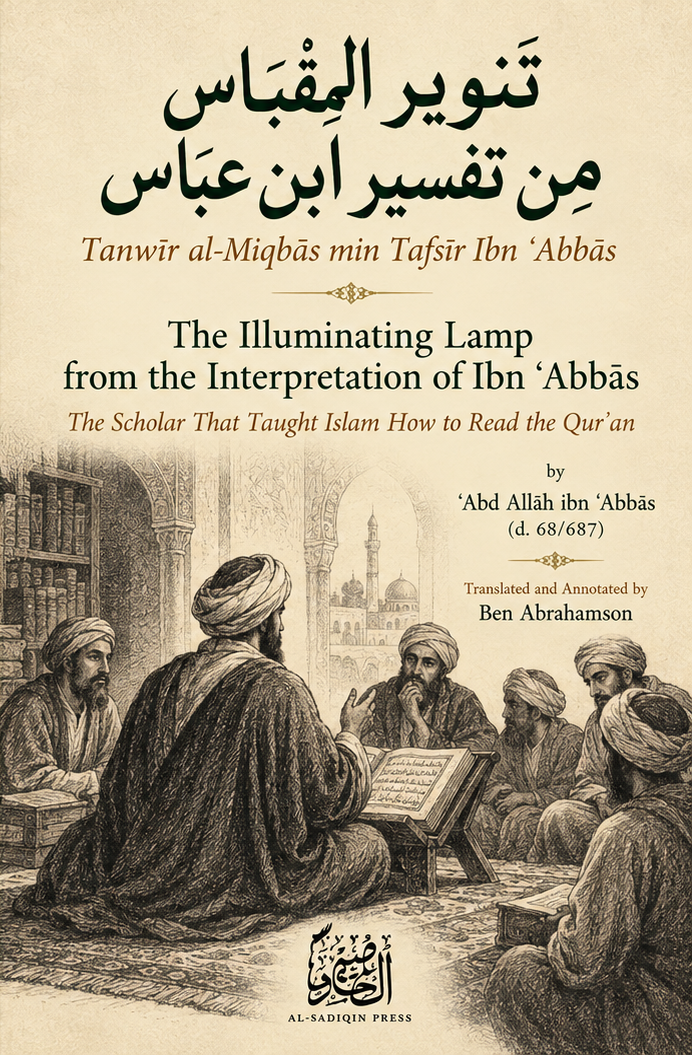
Tanwīr al-Miqbās
تنوير المقباس من تفسير ابن عباس
Tanwīr al-Miqbās min Tafsīr Ibn ʿAbbās
The Illuminating Lamp from the Interpretation of Ibn ʿAbbās
The Scholar That Taught Islam How to Read the Qurʾan
A new way to read the tafsīr attributed to Ibn ʿAbbās
Tanwīr al-Miqbās min Tafsīr Ibn ʿAbbās is one of the best-known continuous Qurʾanic commentaries transmitted under the name of the Companion ʿAbd Allāh ibn ʿAbbās. The present edition offers a complete critical English translation of the work while also addressing the central historical question raised by its attribution: how does the commentary relate to the much wider body of exegetical traditions transmitted from Ibn ʿAbbās in the classical tafsīr literature?
Rather than treating the medieval compilation in isolation, this project places it beside a broad collection of Ibn ʿAbbās tafsīr traditions drawn from major Qurʾanic commentaries. The reports are arranged by Qurʾanic verse and, wherever the source preserves them, their isnāds are given. Readers can therefore compare the wording and interpretation of Tanwīr directly with independently transmitted material attributed to Ibn ʿAbbās.
The result is both a readable translation and a research tool for the study of early Qurʾanic interpretation, transmission, attribution, and the development of tafsīr.
The parallel Ibn ʿAbbās tradition collection
What makes this edition different
Each Qurʾanic passage is presented with the corresponding translation of Tanwīr al-Miqbās. Alongside it, the edition gathers relevant tafsīr reports attributed to Ibn ʿAbbās from a wide range of classical sources. The reports are organized under the same Qurʾanic verses so that the reader can see agreements, expansions, alternative explanations, and divergences directly rather than through a later summary.
- Complete English translation of Tanwīr al-Miqbās
- A broad collection of ḥadīth and athār attributed to Ibn ʿAbbās in the major tafsīr works
- Isnāds included wherever they are preserved by the source
- All material sorted by Qurʾanic verse
- Tanwīr and parallel Ibn ʿAbbās traditions presented together for direct comparison
- Critical notes on textual, philological, historical, and transmission questions
- Clear distinction between attribution in the sources and historical certainty
Ibn ʿAbbās and the formation of tafsīr
ʿAbd Allāh ibn ʿAbbās, the Prophet Muḥammad’s cousin and one of the most influential scholarly figures among the Companions, became the paradigmatic early authority for Qurʾanic interpretation. Traditions attributed to him address Arabic vocabulary, circumstances of revelation, law, theology, prophetic history, earlier scripture, and the interpretation of difficult or ambiguous passages.
The importance of Ibn ʿAbbās lies not in a single surviving authored commentary, but in the enormous exegetical legacy transmitted through his students and through later collections. This edition is designed to make that dispersed legacy visible beside the continuous commentary that later circulated under his name.
About the critical translation
The Arabic text is treated as authoritative for the translation. The English is designed to remain close to the structure and vocabulary of the source while reading as dignified academic prose. Qurʾanic quotations are translated afresh, technical terminology is handled contextually, and ambiguities are preserved where they materially affect interpretation.
The notes distinguish the claims of the medieval compilation from independently transmitted Ibn ʿAbbās traditions. They identify significant parallels in early tafsīr, variant explanations, historical figures, lexical problems, and questions of transmission and attribution. The purpose is neither to authenticate the entire compilation wholesale nor to dismiss it wholesale, but to allow the evidence for each exegetical unit to be examined in context.
Publication and download
Tanwīr al-Miqbās with parallel Ibn ʿAbbās tafsīr traditions and isnāds
Project information
Published by Al Sadiqin Press as part of the Alsadiqin Institute programme of critical translation, source comparison, and the study of classical Islamic texts.